
Event story · Islamabad
At Indus RAS Expo 2026, Pakistan’s leadership flew a simulator built in Pakistan
Two days at the Pakistan-China Friendship Centre put our Super Mushshak full-motion simulator in front of the country’s most senior civil and military leadership — and placed flight simulation squarely inside Pakistan’s national conversation about robotics, autonomy and indigenous engineering.
22–23 July 2026
Pakistan-China Friendship Centre, Islamabad
Aviation Section · Hall GF, Stall 06
Super Mushshak full-motion simulator
Exhibitor
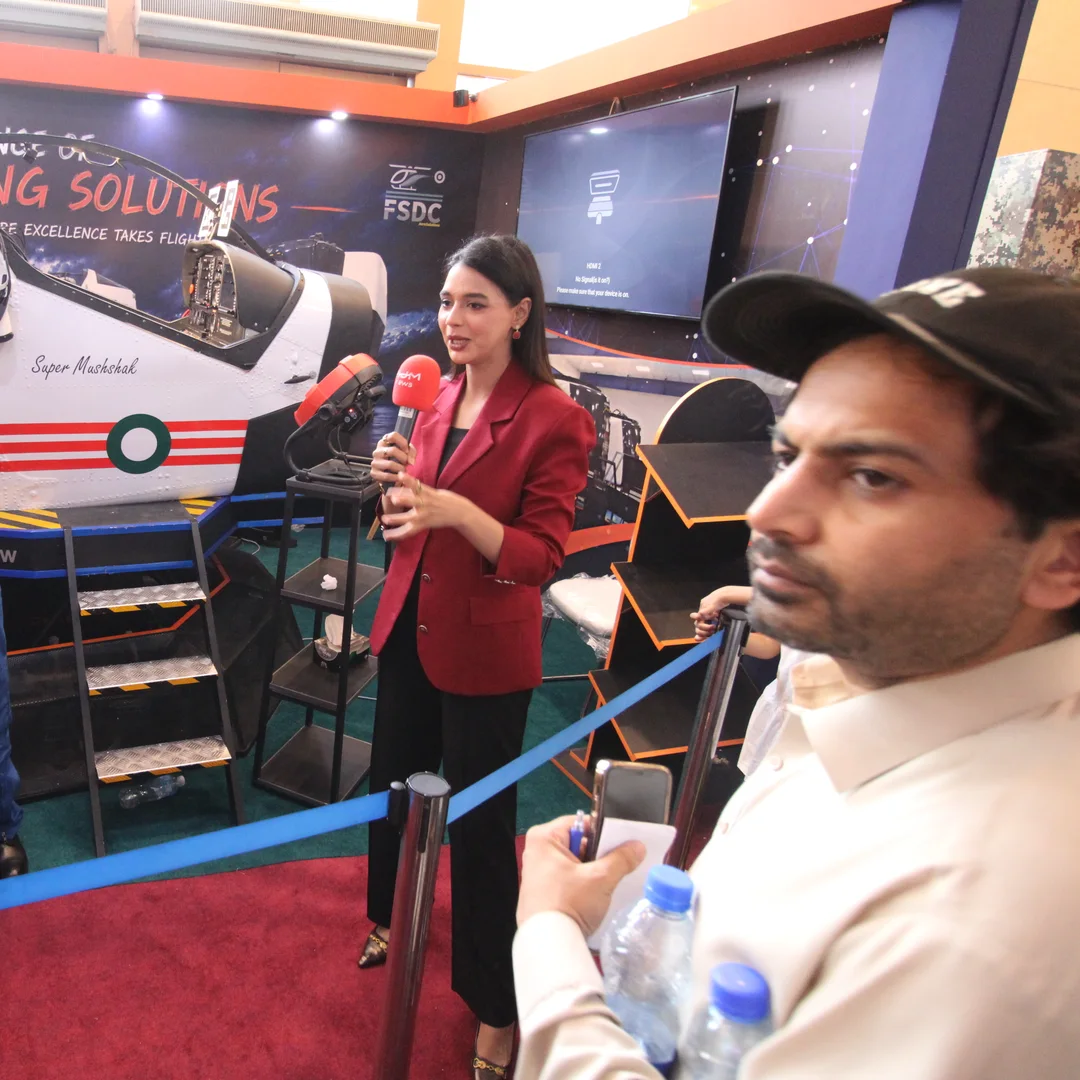
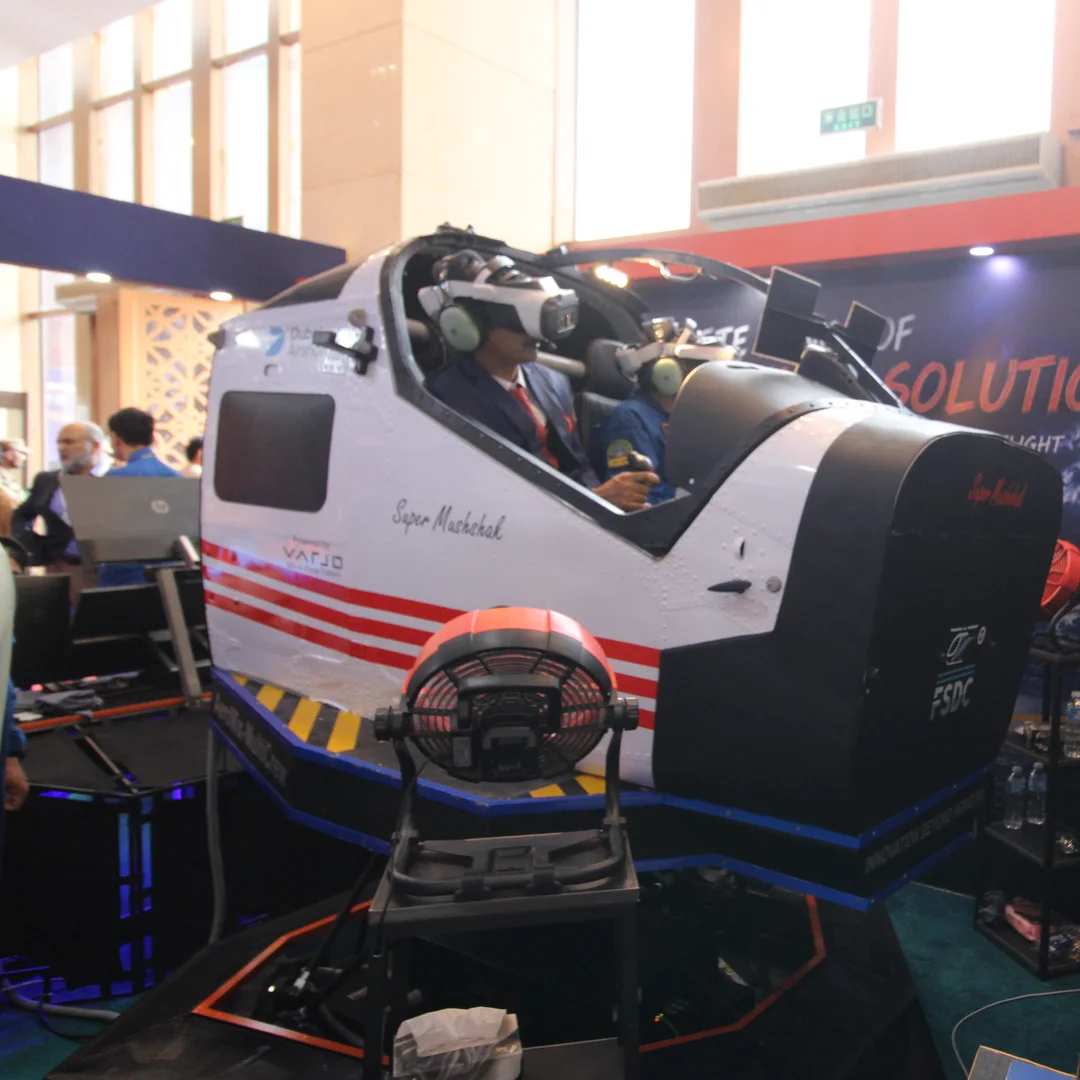
FSDC Aerosolutions exhibited at Indus RAS Expo 2026 on 22–23 July 2026 at the Pakistan-China Friendship Centre in Islamabad, showing a Super Mushshak full-motion flight simulator configured for fixed-wing and rotary-wing training. Public posts from FSDC, the Pakistan Aerospace Council and defence media record that Pakistan’s Prime Minister and Field Marshal Syed Asim Munir experienced the simulator at the stand, and that Federal IT Minister Shaza Khawaja also took a session.
A robotics expo is an unusual place to park a flight simulator
Indus RAS Expo is not an airshow. It is Pakistan’s national platform for robotics, artificial intelligence and autonomous systems — the kind of event where you expect ground robots, drone swarms and university mechatronics labs rather than a six-axis motion base with a cockpit bolted to the top of it. That mismatch is exactly why the appearance mattered.
Synthetic training has spent two decades being treated as an accessory to aviation: useful, expensive, slightly invisible. What the last few years have changed is the direction of the dependency. Autonomy programmes need somewhere safe and repeatable to fly ten thousand approaches. Human-machine interface work needs a cockpit that behaves like the real one. Flight-control research needs a physics model it can trust before anything leaves the ground. All three of those needs are simulator needs — which is why a simulator manufacturer belongs in the middle of a national autonomy conversation, not on the edge of it.
What FSDC actually put on the stand
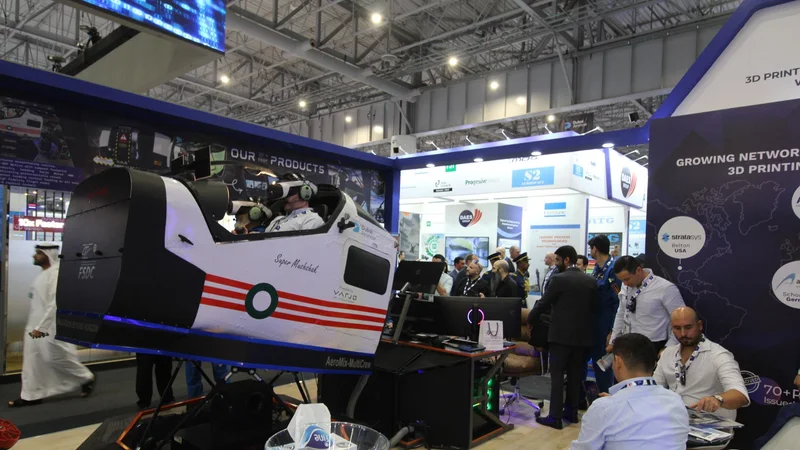
The centre of the stand was a Super Mushshak full-motion simulator — the same family of platform FSDC has been developing around Pakistan’s primary trainer fleet. In the pre-event posts, the company described a configurable training environment rather than a single fixed device, covering:
- Fixed-wing and rotary-wing applications from one hardware frame, with the flight model, visuals and cockpit behaviour switched in software.
- Emergency and abnormal procedures that are expensive, risky or simply unavailable in the aircraft.
- Crew coordination for multi-crew handling and communication discipline.
- Instructor-led scenarios driven from the FSDC Instructor Operating Station, with failure injection, weather and repositioning under instructor control.
Underneath that sits the engineering FSDC has been iterating on since the Mi-17 programme: a fully electric 6-DOF motion platform, digital control loading driving realistic force feel at the pilot’s hands, and a visual environment rendered with high-resolution terrain models of Pakistani airports and regional terrain — which is the part visitors notice first, because they recognise the runway they are looking at.
The moment the stand stopped being a stand
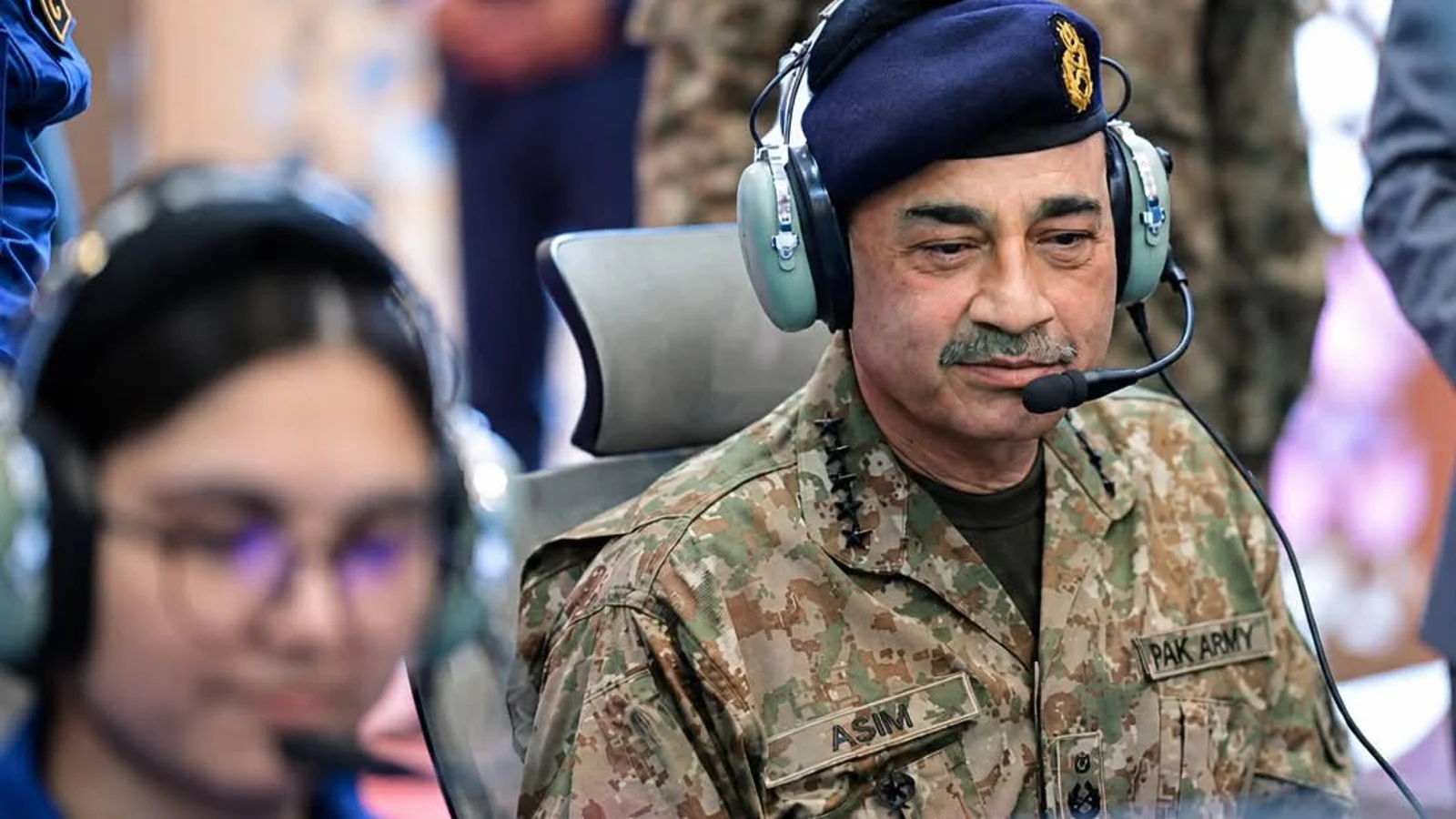
On the first day, Pakistan’s Prime Minister Mian Muhammad Shehbaz Sharif and the Chief of Defence Forces, Field Marshal Syed Asim Munir, visited the FSDC stand and experienced the Super Mushshak full-motion simulator. FSDC published the visit on its own LinkedIn channel; Global Defense Insight, the Pakistan Aerospace Council and a wide spread of public posts on X, Facebook and Instagram carried the same core story within hours.

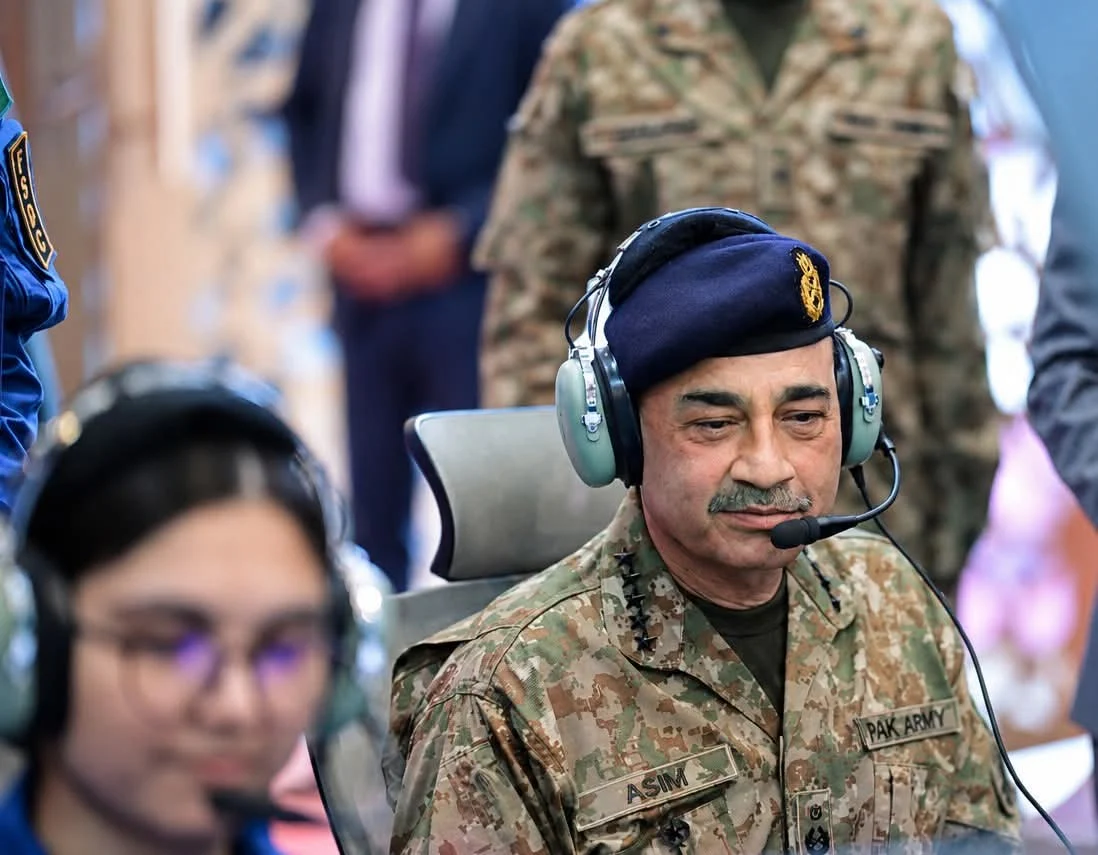
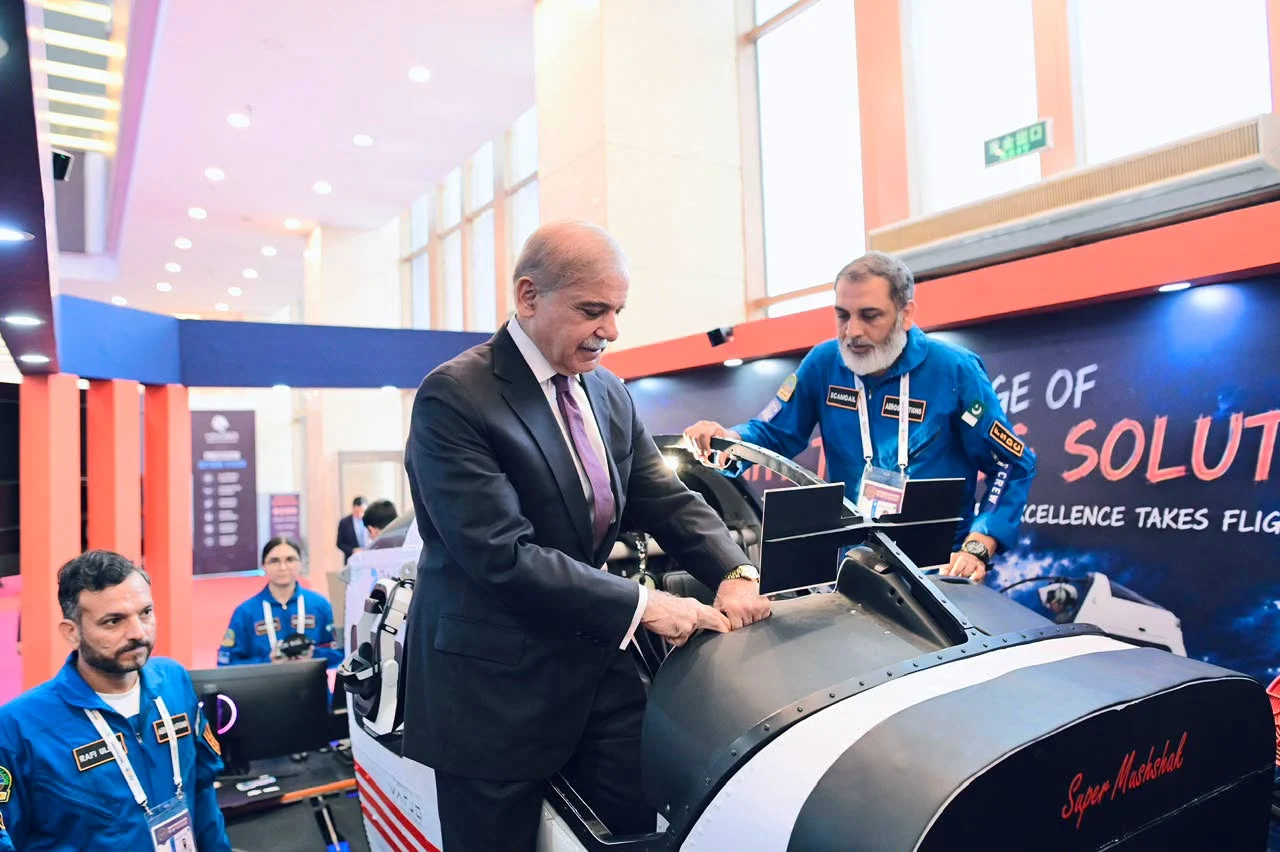
We had the honour of welcoming Pakistan’s leadership to our stand to experience the Super Mushshak full-motion simulator — a system designed, engineered and built in Pakistan.
— FSDC Aerosolutions, public LinkedIn post, 22 July 2026
A second visit followed from Shaza Khawaja, Federal Minister for Information Technology and Telecommunication, who was publicly shown taking a simulator session at the stand. Between them, those two visits are worth more than a press release: they put a Pakistani-built synthetic trainer in front of the people who decide what the country’s technology agenda funds, and they did it in a room dedicated to autonomy and AI rather than to defence procurement.
On sourcing. Every claim on this page is traceable to a public post, an official event page or trade coverage. The full list is in the source register below, grouped by platform, with direct links.
Two days, in order
Pre-show announcement
FSDC publishes its “Meet FSDC at Indus RAS Expo 2026” carousel, inviting visitors to experience the simulator and setting out the training scenarios on offer at the stand.
Doors open at the Pakistan-China Friendship Centre
The expo opens across two days as Pakistan’s national robotics and autonomous systems platform, organised with Ignite and the Ministry of IT & Telecom.
Prime Minister and Field Marshal Syed Asim Munir at the stand
Both experience the Super Mushshak full-motion simulator. FSDC posts the visit the same day; defence media and partner organisations amplify it across X, Facebook and Instagram.
Federal IT Minister session and engineering conversations
Shaza Khawaja takes a simulator session. Alongside the VIP traffic, the stand runs technical discussions with academic and defence researchers about using high-fidelity simulation as a testbed for autonomous flight algorithms and uncrewed systems.
Post-show amplification
The Pakistan Aerospace Council congratulates FSDC and Aviation MRO; Aviation MRO emphasises the “assembled and manufactured in Pakistan” framing; TechJuice publishes a short piece with an FSDC design engineer explaining what goes into building a simulator.
Where simulation meets autonomy
The most interesting conversations at the stand were not about pilot training at all. They were about what else a validated flight model and an instructor station are good for.
| Simulator capability | Pilot-training use | Autonomy / research use |
|---|---|---|
| Validated flight model | Handling, type familiarity, performance | Plant model for control-law development and tuning |
| Instructor Operating Station | Failure injection, weather, repositioning | Scripted, repeatable test cases and edge-case sweeps |
| 6-DOF motion cueing | Onset cues, spatial disorientation training | Human-factors work on operator handover and workload |
| Mixed-reality cockpit | Real switches, virtual world, no negative transfer | HMI prototyping for crewed–uncrewed teaming |
| Custom terrain & airfields | Local circuit and approach familiarity | Geo-specific mission rehearsal and route validation |
None of that requires a new product. It requires the industry to stop thinking of a simulator as a training appliance and start thinking of it as a flight-test surrogate that happens to have a seat in it. That is the argument FSDC took to Islamabad, and a robotics expo turned out to be the right room for it.
The two days on film
Broadcast crews, partner organisations and government channels all filmed at the stand. Everything below plays in place — nothing loads from a social platform until you press play.
From the show floor
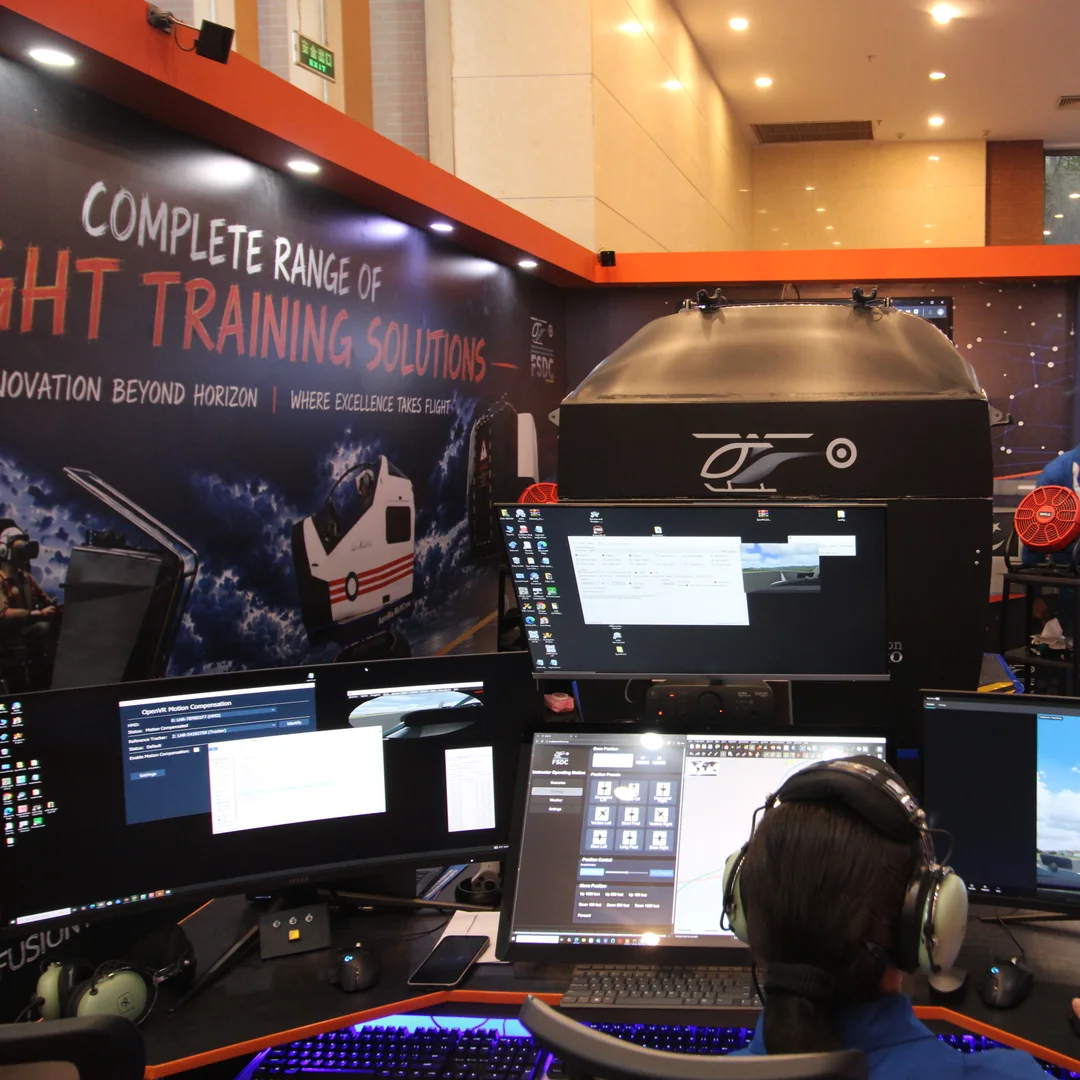
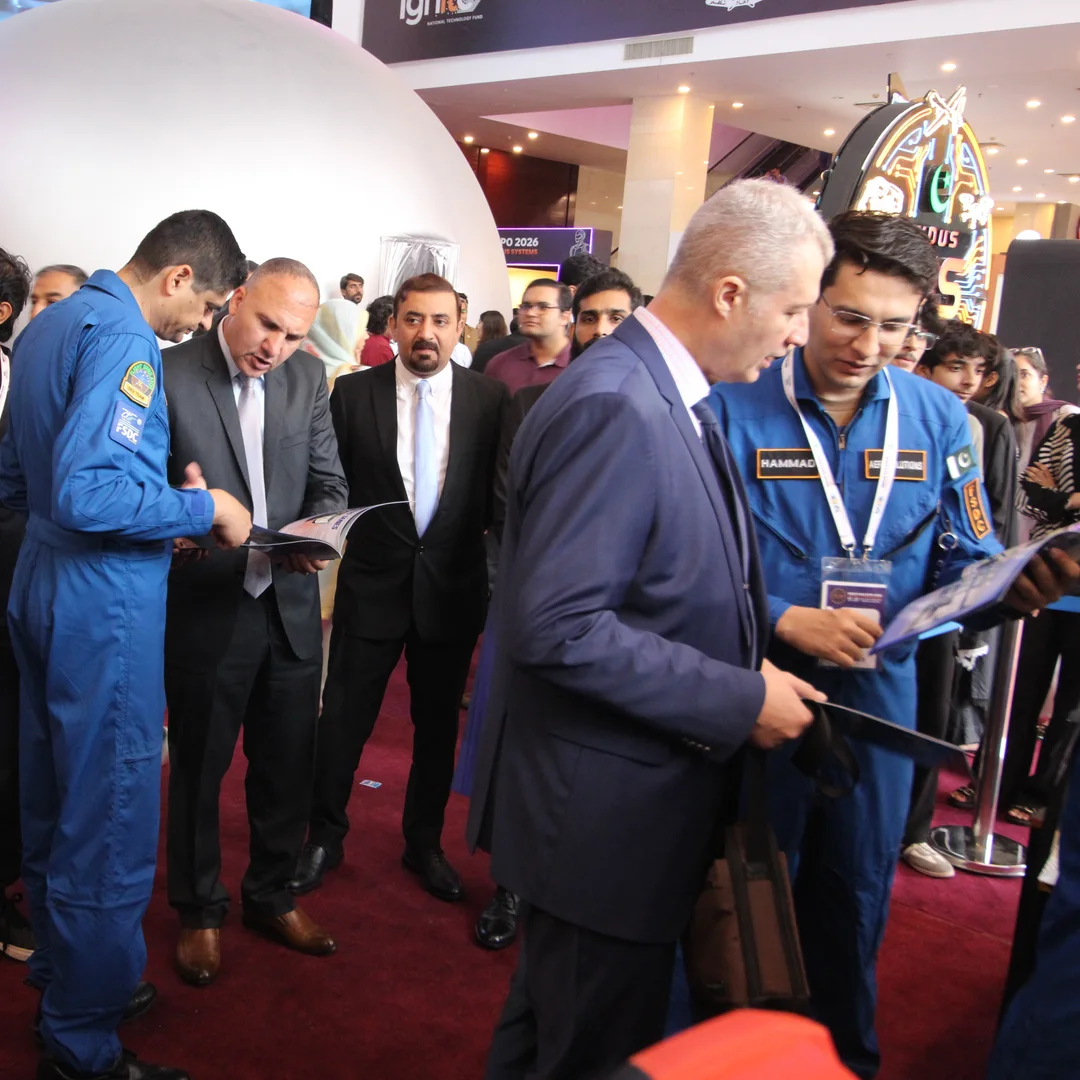
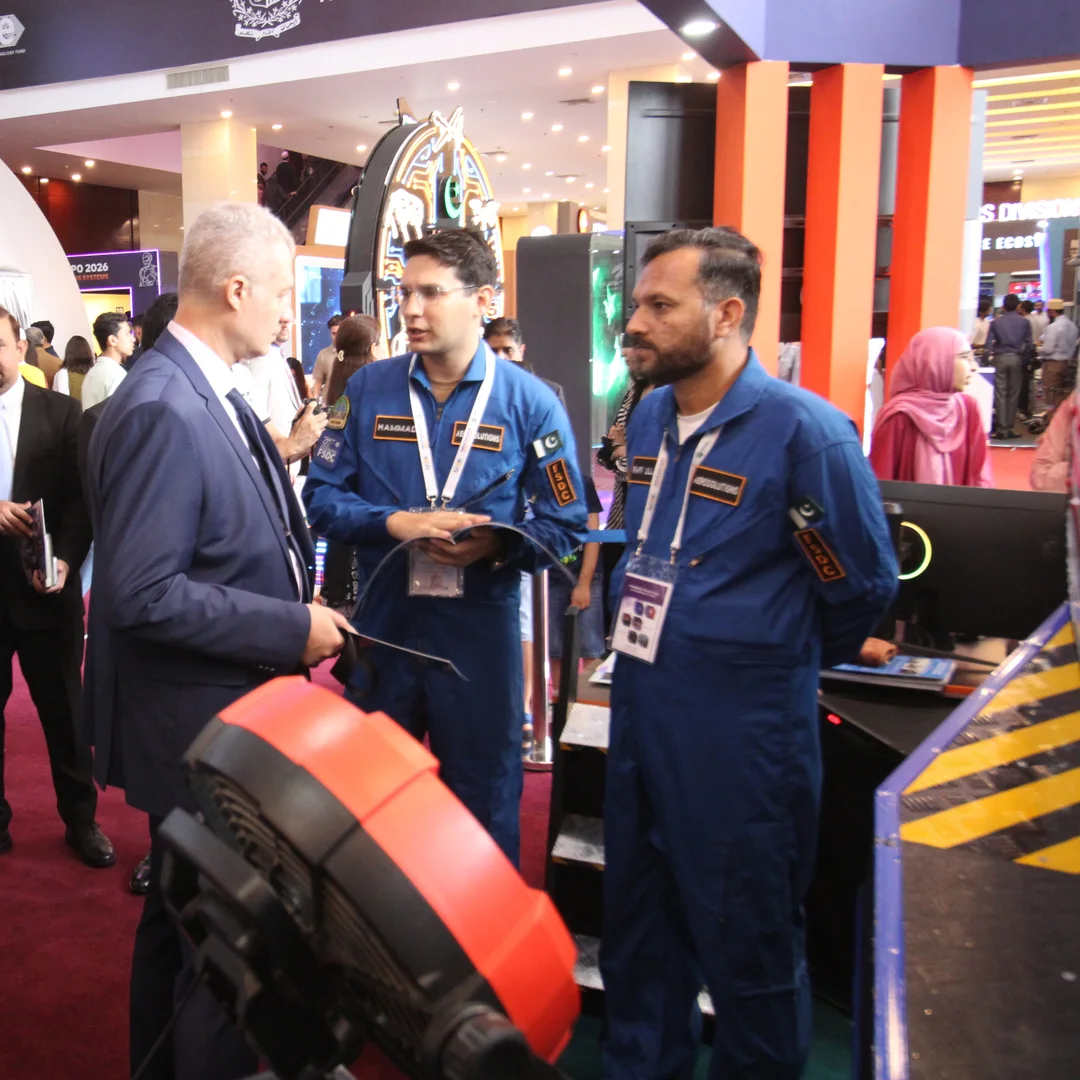
What we took away from it
Three things, and none of them are about the expo itself.
First, the “built here” argument lands hardest when someone is sitting in the seat. You can put indigenous content percentages on a slide and nobody will remember them. Put a minister in a motion cockpit flying an aircraft their own air force operates, and the argument makes itself in ninety seconds.
Second, the autonomy community wants simulation and does not always know it. The questions we fielded about testbeds, repeatability and flight-model fidelity came from people building ground robots and UAS, not from flight schools. That is a market adjacency worth taking seriously.
Third, a national platform reframes a company. Dubai Airshow 2025 positioned FSDC as an exporter. Indus RAS positioned it as national infrastructure. Both are true, and they need different sentences.
Related FSDC engineering reading
- AeroMix Multi-Crew mixed-reality simulator
- AeroSim Pro full-motion simulator
- Fixed-wing simulators (Mushshak, MFI-17 & custom)
- How 6-DOF motion platforms improve training realism
- Mixed reality vs virtual reality for flight training
- Download the Super Mushshak and corporate brochures
Frequently asked questions
What did FSDC Aerosolutions show at Indus RAS Expo 2026?
An advanced flight simulation platform in the expo’s aviation section, centred on a Super Mushshak full-motion simulator configured for fixed-wing and rotary-wing training, emergency procedures, crew coordination and instructor-led scenarios.
Where and when was Indus RAS Expo 2026 held?
22–23 July 2026 at the Pakistan-China Friendship Centre, Garden Avenue, Shakarparian Road, Islamabad — Pakistan’s national platform for robotics, AI and autonomous systems.
Who visited the FSDC stand?
Public posts record that Pakistan’s Prime Minister and Field Marshal Syed Asim Munir experienced the Super Mushshak full-motion simulator, and that Federal Minister for IT and Telecommunication Shaza Khawaja also took a session.
Is the simulator built in Pakistan?
Yes. FSDC Aerosolutions designs and manufactures its simulators in Pakistan as the simulator division of Aerosolutions (Pvt.) Ltd. Partner posts around the expo described the displayed platform as assembled and manufactured in Pakistan.
Can flight simulators be used for autonomous systems research?
Yes. A validated flight model plus an instructor station gives you a safe, repeatable testbed for evaluating autonomous flight algorithms, HMI concepts and uncrewed aircraft behaviour long before anything is risked in flight test.
Can we book a simulator demonstration outside an expo?
Yes — contact the engineering team to arrange a session or a technical walkthrough of the platform.
Source register & coverage
Every factual claim above traces to one of the public references below — official event pages, FSDC’s own posts, partner organisations and trade media. Links open in a new tab.